

Email Marketing for Dentists
Why Email Marketing Still Matters
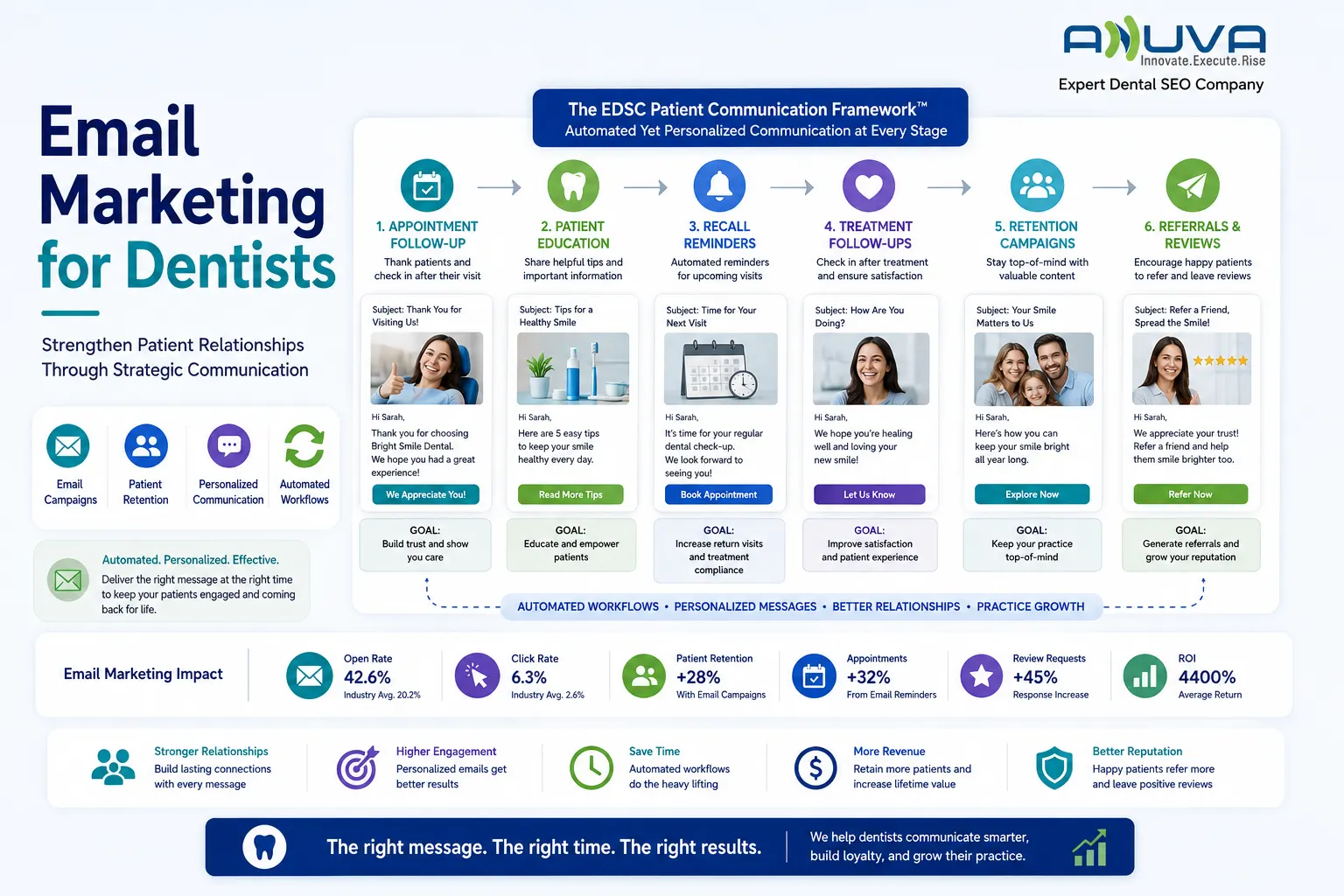
While new marketing channels continue to emerge, email remains one of the most effective ways to maintain ongoing communication with existing and prospective patients.
Unlike social media platforms, where algorithms determine who sees your content, email gives your practice the opportunity to communicate directly with patients who have chosen to hear from you. This direct connection makes email one of the most reliable channels for delivering timely education, reinforcing preventive care, and maintaining meaningful relationships throughout the patient lifecycle.
Unlike search engines or social media platforms, where visibility depends on algorithms and competition, email allows your practice to communicate directly with people who have already expressed interest in your services or have an existing relationship with your office. For dental practices, email marketing is not simply about sending newsletters.
It provides an opportunity to educate patients, encourage preventive care, share practice updates, strengthen patient relationships, and remain top of mind between appointments. When used strategically, email marketing supports the entire patient lifecycle—from welcoming new patients to encouraging long-term retention and reactivating inactive patients.
At Expert Dental SEO Company, we view email as a relationship-building channel that complements your broader digital marketing strategy rather than functioning as an isolated communication tool.
Email Marketing Supports Multiple Practice Goals
A structured email strategy can help your practice:
- Strengthen patient relationships
- Encourage regular preventive care
- Improve patient retention
- Educate patients about treatments
- Share practice updates
- Promote seasonal oral health awareness
- Support referral opportunities
- Re-engage inactive patients
- Reinforce trust between appointments
- Complement SEO, social media, and content marketing
Instead of relying solely on acquiring new patients, email marketing helps maximize the value of relationships you’ve already established.
Looking for better ways to stay connected with your patients?
Schedule an Email Marketing Strategy Session, and we’ll review your current communication approach and identify opportunities to improve patient engagement and long-term retention.
Beyond Newsletters: Building Long-Term Patient Relationships
Many dental practices associate email marketing with occasional newsletters or promotional announcements.
While newsletters can be valuable, they represent only one part of an effective communication strategy.
The most successful email programs deliver timely, relevant, and educational information that supports patients throughout their relationship with your practice.
Rather than asking, “What should we promote this month?”, practices should consider:
- What questions do patients commonly ask?
- What preventive guidance would benefit patients?
- Which treatments require ongoing education?
- How can we encourage regular hygiene appointments?
- Which patients may benefit from follow-up communication?
- How can we remain helpful between visits?
Answering these questions helps transform email from a promotional channel into an ongoing patient education resource.
Common Challenges Dental Practices Face
Many practices encounter similar obstacles when managing email communication.
Inconsistent Communication
Some practices send emails only when promoting a special offer or announcing a holiday schedule. Long gaps between communications reduce familiarity and make future messages less recognizable. A consistent communication schedule helps patients remain connected to your practice throughout the year.
Generic Messaging
Sending identical emails to every patient often reduces relevance. Different patient groups have different interests and communication needs.
For example:
- New patients
- Existing patients
- Hygiene patients
- Cosmetic dentistry patients
- Orthodontic patients
- Implant consultation patients
- Families
- Long-term inactive patients
Segmenting communication helps make emails more useful and personalized without becoming overly complex.
Overly Promotional Content
Patients generally respond more positively to helpful educational content than constant promotional messaging.
An effective email strategy balances:
- Oral health education
- Preventive care
- Practice updates
- Appointment reminders
- Seasonal guidance
- Community news
- Treatment education
- Occasional promotional campaigns
Educational communication builds trust over time while maintaining patient engagement.
Limited Measurement
Many practices know how many emails were sent. Fewer understand how those communications influence patient engagement.
Meaningful evaluation may include:
- Open rates
- Click-through rates
- Website visits
- Appointment requests
- Recall response
- Reactivation performance
- Educational content engagement
- Long-term patient retention
Tracking these indicators helps refine future communication strategies.
The EDSC Patient Communication Framework™
Patient relationships continue long after an appointment ends. Regular, thoughtful communication helps practices remain connected with patients while encouraging preventive care, reinforcing trust, and supporting long-term retention.
The EDSC Patient Communication Framework™ explains how strategic email marketing contributes to stronger patient relationships throughout the lifecycle of care. Rather than focusing primarily on promotions, the framework emphasizes consistent education, timely communication, and ongoing value.
Stage 1 – Patient Visits the Practice
Every communication journey begins with an established patient relationship. Whether someone visits for a routine examination, emergency treatment, cosmetic consultation, or specialist procedure, the appointment creates an opportunity for continued engagement. Rather than allowing communication to end after the visit, practices can continue supporting patients through relevant follow-up emails.
Examples include:
- Welcome messages
- Thank-you emails
- Post-appointment care guidance
- Oral hygiene recommendations
- Frequently asked questions
- Practice resources
- Educational articles
- Preventive care reminders
These early interactions help establish expectations for ongoing communication while reinforcing your commitment to patient care.
Stage 2 – Deliver Helpful Educational Follow-Up
Patients often leave the practice with questions that arise after their appointment. Educational follow-up emails provide an opportunity to reinforce important information while demonstrating your commitment to patient care.
Examples include:
- Post-treatment care instructions
- Oral hygiene recommendations
- Recovery guidance
- Frequently asked questions
- Preventive care tips
- Links to educational resources
- Nutrition advice for oral health
- Treatment-specific guidance
Providing relevant educational content shortly after an appointment helps patients feel supported while improving their overall experience.
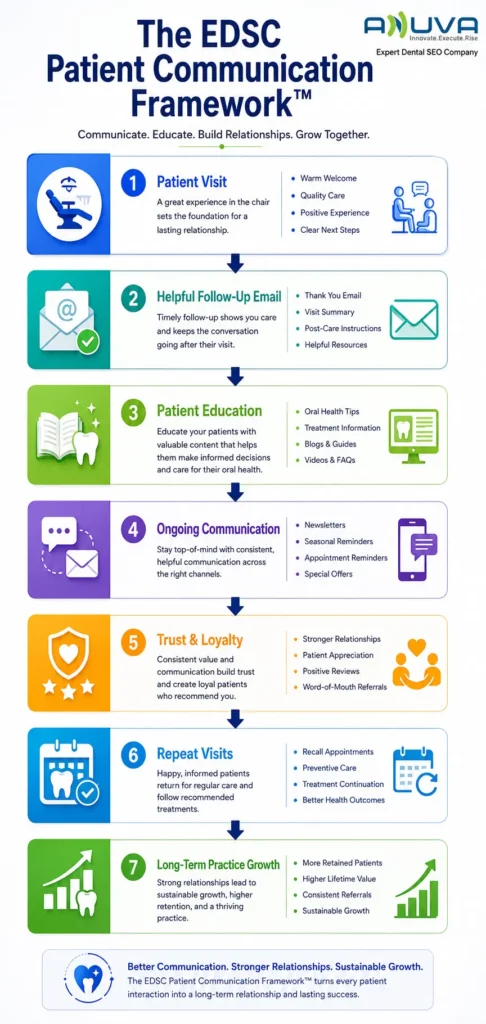
Stage 3 – Maintain Ongoing Communication
Patients should hear from your practice for more than appointment confirmations. Regular communication keeps your practice visible while continuing to provide value.
Examples include:
- Monthly newsletters
- Seasonal oral health tips
- Children’s dental health reminders
- Holiday office updates
- New technology announcements
- Team introductions
- Community involvement
- Practice achievements
- Frequently asked questions
- Educational articles
The objective is to remain a trusted source of oral health information rather than communicating only when appointments are due.
Stage 4 – Strengthen Patient Trust
Trust develops through consistent, relevant communication. Patients who regularly receive useful information are more likely to perceive your practice as knowledgeable, approachable, and genuinely invested in their well-being.
Trust-building emails may include:
- Preventive care education
- Answers to common concerns
- Explanations of treatment options
- Dentist messages
- Patient success stories (with appropriate written consent)
- Community initiatives
- Continuing education updates
- Practice improvements
These communications reinforce the relationship beyond clinical appointments
Stage 5 – Encourage Repeat Visits
Preventive dentistry depends on consistency. Thoughtfully timed communication helps encourage patients to continue regular care rather than waiting until problems develop.
Relevant campaigns may include:
- Hygiene reminders
- Six-month recall reminders
- Annual examination reminders
- Follow-up care recommendations
- Family scheduling reminders
- Preventive care campaigns
- Treatment continuation reminders
- Wellness-focused educational series
The emphasis should remain on supporting oral health rather than creating unnecessary urgency.
Stage 6 – Support Long-Term Practice Growth
Patient retention is one of the most sustainable drivers of practice growth. Maintaining relationships with existing patients often complements efforts to attract new patients.
Long-term communication contributes to:
- Higher patient loyalty
- Increased appointment consistency
- Greater referral opportunities
- Stronger brand recognition
- Improved patient education
- Better patient lifetime value
- More predictable practice growth
Over time, this ongoing communication becomes an important component of a comprehensive patient relationship strategy.
Our Dental Email Marketing Services
Our email marketing services are designed to help dental practices communicate consistently, educate patients, and strengthen long-term relationships. Rather than sending occasional promotional emails, we help practices develop structured communication strategies that support both patient care and business growth.
Email Marketing Strategy
Every successful email program begins with a communication strategy.
Before developing campaigns, we evaluate:
- Practice objectives
- Patient demographics
- Services offered
- Existing communication methods
- Seasonal opportunities
- Patient lifecycle stages
- Brand voice
- Regulatory and privacy considerations
This planning helps ensure that each campaign serves a clear purpose while maintaining a consistent patient experience.
Patient Newsletters
Newsletters provide an opportunity to maintain regular contact while delivering helpful and engaging information.
A well-balanced newsletter may include:
- Oral health education
- Practice updates
- Team news
- Seasonal dental advice
- Frequently asked questions
- Community events
- New technology introductions
- Patient resources
The objective is to provide ongoing value rather than simply promoting services.
Educational Email Campaigns
Educational campaigns focus on helping patients better understand their oral health and available treatment options.
Educational campaigns are most effective when they answer the questions patients commonly ask before and after treatment. Rather than focusing primarily on promotions, these campaigns provide practical guidance that helps patients feel informed, confident, and supported throughout their oral health journey. Over time, consistent educational communication strengthens trust while positioning your practice as a reliable source of ongoing dental advice.
Topics may include:
- Preventive dentistry
- Children’s oral health
- Cosmetic dentistry
- Dental implants
- Invisalign
- Periodontal health
- Nutrition and oral wellness
- Emergency dental guidance
- Home care recommendations
- Myth-versus-fact educational series
These campaigns position your practice as a trusted educational resource while helping patients make informed decisions.
Recall & Hygiene Campaigns
Routine preventive care benefits both patients and practices. Recall campaigns encourage patients to maintain regular examinations and hygiene appointments through timely, helpful communication.
Campaigns may include:
- Six-month hygiene reminders
- Annual examination reminders
- Family scheduling reminders
- Preventive care education
- Missed appointment follow-up
- Continuing care reminders
- Oral health awareness campaigns
- Personalized recall messaging where appropriate
Rather than relying solely on administrative reminders, these campaigns reinforce the value of preventive dental care and regular professional attention.
Reactivation Campaigns
Not every patient schedules appointments consistently. Some postpone routine hygiene visits, delay recommended treatment, or simply lose touch with the practice over time. Reactivation campaigns help reconnect with these patients through thoughtful, relevant communication that encourages them to resume their oral healthcare. Rather than relying on repeated promotional offers, successful reactivation campaigns focus on education, preventive care, and patient support.
Depending on your objectives, campaigns may include:
- Overdue hygiene reminders
- Missed recall follow-up
- Treatment continuation reminders
- Seasonal oral health campaigns
- Preventive care education
- Practice updates
- New technology announcements
- Welcome-back messages
- Special office events
- General oral health awareness
The purpose is to remind patients of the value of ongoing dental care while making it easy for them to reconnect with your practice.
Referral Campaigns
Satisfied patients often become one of a practice’s strongest sources of growth. Email provides an effective way to encourage referrals without placing unnecessary pressure on patients. Referral-focused communication should emphasize appreciation and the quality of care rather than aggressive promotion.
Examples include:
- Thank-you messages
- Family referral information
- Community appreciation campaigns
- Patient appreciation events
- Educational resources that patients can share
- Practice milestone announcements
- Referral program updates (where applicable)
Referral campaigns work best when they are integrated into an overall patient communication strategy that consistently delivers value.
Performance Reporting
Effective email marketing should be measured using meaningful engagement and business metrics rather than simply counting how many emails were sent. Reporting helps identify which communications resonate with patients and where future improvements may be made.
Depending on your goals, reporting may include:
- Delivery rate
- Open rate
- Click-through rate
- Website visits
- Appointment requests
- Recall response rate
- Reactivation performance
- Educational content engagement
- Audience growth
- Unsubscribe trends
- Campaign comparisons
These insights support continuous improvement while helping practices better understand how email contributes to patient relationships and practice growth.
What types of emails should dental practices send?
Dental practices benefit from sending a balanced mix of educational newsletters, preventive care reminders, hygiene and recall communications, treatment education, post-appointment follow-up, practice updates, seasonal oral health tips, patient appreciation messages, and reactivation campaigns. The emphasis should remain on providing value, strengthening relationships, and encouraging long-term patient engagement rather than sending frequent promotional emails.
Email Marketing vs. Social Media
Although both channels help practices stay connected with patients, they serve different roles within a complete marketing strategy. Social media is designed to build awareness, educate broad audiences, and encourage public engagement, while email marketing delivers personalized communication directly to people who already know and trust your practice. Together they create a balanced communication system that supports both patient acquisition and long-term retention.
Email marketing and social media both play valuable roles within a dental marketing strategy, but they serve different purposes. Social media helps practices build awareness and engage with a broad audience, while email provides direct communication with patients who have already established a relationship with the practice. Understanding how these channels complement one another helps create a more balanced communication strategy.
Feature | Email Marketing | Organic Social Media |
Primary purpose | Strengthen existing patient relationships | Build awareness and community engagement |
Audience | Existing patients and subscribers | Current followers and prospective patients |
Communication | Direct, personalized messages | Public educational content |
Control | Practice owns the subscriber list | Platform algorithms influence reach |
Content | Newsletters, recalls, follow-up, education | Educational posts, videos, community updates |
Frequency | Scheduled campaigns based on patient needs | Ongoing publishing calendar |
Best outcome | Patient retention, repeat visits, loyalty | Brand awareness, trust, audience growth |
Measurement | Opens, clicks, appointment actions | Reach, engagement, referral traffic |
Neither channel replaces the other. Many dental practices achieve stronger long-term results by combining consistent social media activity with structured email communication. Social media helps prospective patients discover and become familiar with your practice, while email nurtures ongoing relationships with people who have already chosen to connect with you.
Why Dental Practices Choose Expert Dental SEO Company
Successful email marketing involves much more than sending newsletters. The most effective email programs strengthen patient relationships through timely communication, educational content, thoughtful follow-up, and consistent engagement throughout the patient lifecycle.
At Expert Dental SEO Company, we help dental practices develop communication strategies that complement patient care while supporting measurable business growth.
We Put Patient Education First
The most valuable emails are those that help patients make informed decisions about their oral health. Rather than relying on constant promotional messaging, we help practices deliver content that answers common questions, reinforces preventive care, explains treatment options, and supports long-term oral health. Educational communication builds trust while positioning your practice as a reliable healthcare resource.
We Focus on Long-Term Patient Relationships
A patient’s relationship with your practice extends well beyond a single appointment.
Our email strategies are designed to support every stage of that relationship through:
- Welcome communications
- Preventive care education
- Recall reminders
- Treatment follow-up
- Reactivation campaigns
- Practice updates
- Community news
- Seasonal oral health education
This ongoing communication helps practices remain connected while encouraging consistent patient engagement.
We Integrate Email With Your Entire Marketing Strategy
Email marketing is most effective when it supports your broader digital marketing ecosystem.
Our communication strategies complement:
- Dental SEO
- Content Marketing
- Social Media Marketing
- Google Business Profile
- Reputation Management
- Landing Pages
- Lead Generation
- Marketing Analytics
- Marketing Automation
Rather than operating independently, each channel reinforces the others to create a more consistent patient experience.
We Measure More Than Open Rates
Email performance should be evaluated using business outcomes rather than isolated marketing metrics.
Our reporting emphasizes:
- Patient engagement
- Recall participation
- Appointment requests
- Reactivation success
- Educational content performance
- Website engagement
- Patient retention trends
- Opportunities for continuous improvement
This approach helps practices refine future communication while supporting stronger long-term relationships.
Our Email Marketing Process
Our email marketing process combines strategic planning, educational communication, audience segmentation, and ongoing optimization.
Step 1 – Communication Strategy
Every engagement begins by understanding your practice.
We review:
- Practice goals
- Existing communication methods
- Patient demographics
- Service priorities
- Brand voice
- Regulatory and privacy considerations
- Seasonal opportunities
This foundation ensures that future communication remains consistent with your practice’s objectives.
Step 2 – Audience Segmentation
Different patients benefit from different types of communication.
Depending on your practice, audiences may be organized into segments such as:
- New patients
- Existing patients
- Hygiene patients
- Cosmetic dentistry patients
- Implant patients
- Orthodontic patients
- Families
- Inactive patients
Segmentation helps improve relevance while reducing unnecessary communication.
Step 3 – Content Development
Educational content is developed around the needs of each audience.
Campaigns may include:
- Monthly newsletters
- Preventive care reminders
- Treatment education
- Oral health awareness
- Practice updates
- Community involvement
- Frequently asked questions
- Seasonal campaigns
Each campaign is designed to provide meaningful value while maintaining a consistent patient experience.
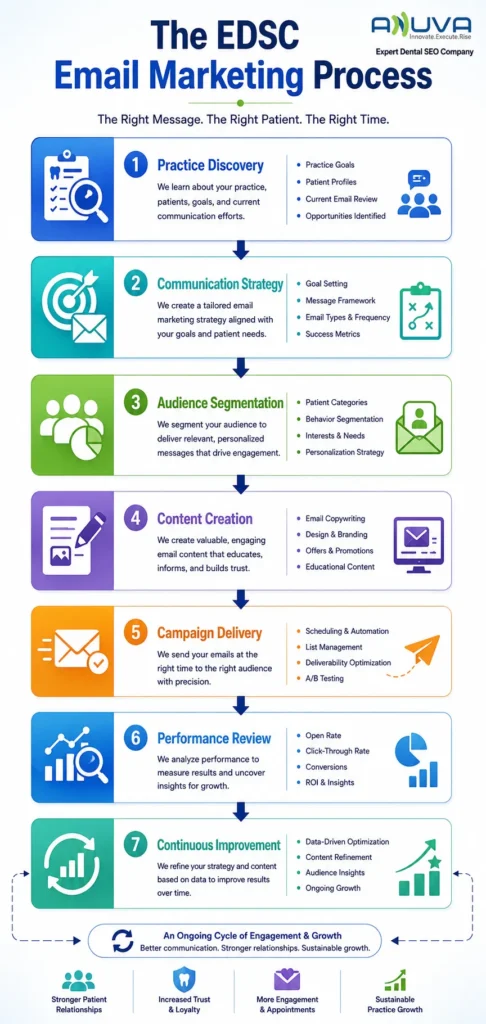
Step 4 – Campaign Delivery
After review and approval, campaigns are prepared for distribution.
This includes verifying:
- Audience selection
- Mobile responsiveness
- Email formatting
- Links and calls-to-action
- Compliance with applicable email regulations
- Scheduling and delivery timing
Careful preparation helps improve the overall patient experience.
Step 5 – Performance Review & Continuous Improvement
Communication strategies should evolve alongside patient needs and practice goals.
Performance reviews help identify:
- High-performing content
- Engagement trends
- Recall participation
- Reactivation success
- Opportunities for future campaigns
- Areas for refinement
Insights from each campaign inform future communication planning and long-term patient engagement.
Frequently Asked Questions
Email marketing helps practices maintain ongoing communication with patients through educational content, preventive care reminders, treatment information, and practice updates. It supports patient retention and encourages long-term engagement.
The ideal frequency depends on your communication goals and patient preferences. Many practices benefit from a consistent schedule that balances educational newsletters, preventive reminders, and timely practice updates without overwhelming recipients.
Educational newsletters, hygiene recall reminders, preventive care guidance, treatment follow-up, patient appreciation messages, seasonal oral health information, and practice announcements often provide long-term value.
Not necessarily.
Segmenting communication based on patient interests, treatment history, or stage in the patient journey helps improve relevance while creating a better overall experience.
Yes.
Regular communication helps practices remain visible between appointments while encouraging preventive care, supporting recall programs, and reinforcing patient relationships.
No.
Email and social media serve different purposes. Social media builds public awareness and community engagement, while email provides direct communication with patients who have already established a relationship with your practice.
Meaningful measurement includes engagement metrics such as open rates and click-through rates alongside business-focused indicators like appointment requests, recall participation, website visits, and patient retention trends.
Educational email campaigns can help patients better understand treatment options, answer common questions, and provide additional information that supports informed decision-making. Clinical recommendations should always remain personalized and discussed directly with the treating dental professional.
Email complements SEO, social media, content marketing, reputation management, paid advertising, and marketing automation by maintaining ongoing communication with existing patients while reinforcing trust and engagement.
We specialize in dental marketing and develop patient-focused communication strategies that emphasize education, relationship building, and measurable long-term practice growth rather than simply sending promotional newsletters.
Regular communication helps your practice remain connected with patients between appointments through educational content, preventive care reminders, recall campaigns, treatment follow-up, and helpful oral health guidance. By consistently providing relevant information instead of only promotional messages, email marketing encourages stronger relationships, repeat visits, and long-term patient loyalty while complementing your overall dental marketing strategy.
Ready to Strengthen Patient Relationships Through Email?
Every email is an opportunity to educate, support, and stay connected with your patients.
Whether your practice wants to improve recall programs, increase patient engagement, or build a more structured communication strategy, thoughtful email marketing can help strengthen relationships long after an appointment ends.
Schedule an Email Marketing Strategy Session
We’ll review your current email communications, identify opportunities for improvement, and develop a patient-focused strategy that supports retention, education, and long-term practice growth.
Request an Email Marketing Audit
Receive a professional assessment of your email strategy, audience segmentation, campaign content, engagement performance, and communication opportunities along with practical recommendations for strengthening your patient communication program.