

Social Media Marketing for Dentists
Why Social Media Matters for Modern Dental Practices
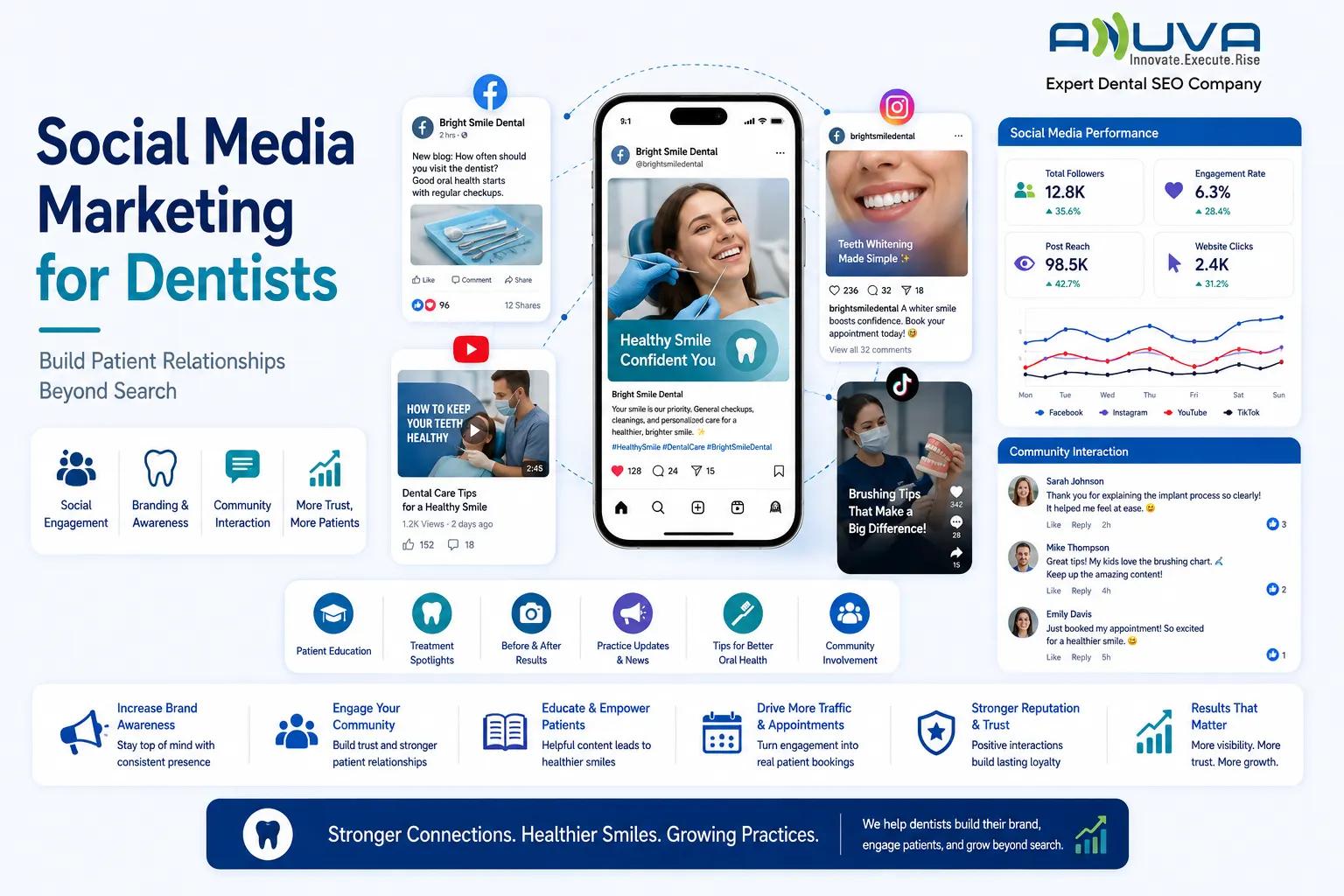
Choosing a dental practice is a personal decision. Before scheduling an appointment, many prospective patients spend time researching providers, reading reviews, visiting websites, and exploring social media profiles to better understand the practice behind the services. Social media has become an important part of that evaluation process.
Today’s patients often interact with multiple digital touchpoints before contacting a dental practice. They may discover your website through Google Search, read reviews, explore your Google Business Profile, and then visit your social media pages to better understand your team, values, and patient experience. A professional social media presence helps reinforce the trust established through these other marketing channels and creates a more consistent digital experience throughout the patient journey.
Rather than serving only as a place to publish announcements or promotional offers, today’s social platforms help practices demonstrate expertise, introduce their team, educate patients, answer common questions, and build familiarity long before a patient contacts the office. For many prospective patients, social media provides the first impression of your practice’s personality, professionalism, and patient experience.
At Expert Dental SEO Company, we view social media as an extension of your patient communication strategy—not simply another marketing channel. When approached strategically, it can strengthen trust, reinforce your brand, and support long-term practice growth.
Social Media Can Support Multiple Practice Goals
A thoughtful social media strategy can contribute to:
- Increasing practice awareness
- Educating prospective patients
- Building community trust
- Reinforcing your brand identity
- Showcasing your dental team
- Highlighting patient success stories (with appropriate consent)
- Supporting local visibility
- Encouraging patient engagement
- Complementing SEO and content marketing
- Strengthening long-term patient relationships
Rather than expecting every social media post to generate an appointment immediately, successful practices use social platforms to remain visible, relevant, and helpful throughout the patient journey.
Wondering whether your practice is making the most of social media?
Schedule a Social Media Strategy Session, and we’ll review your current presence, identify opportunities for improvement, and recommend a strategy that aligns with your practice goals.
Social Media Is More Than Posting Photos
Many practices begin using social media by sharing occasional office updates, holiday greetings, or promotional graphics. While these posts may contribute to visibility, they rarely create a consistent strategy that supports long-term growth.
Effective social media marketing involves planning, consistency, education, and audience engagement. It should answer the questions prospective patients are already asking while reinforcing the expertise and professionalism of your practice. Instead of treating every post as an isolated activity, we recommend building a content ecosystem that supports multiple business objectives over time.
Examples include:
- Educating patients about treatments
- Explaining preventive dental care
- Introducing members of the dental team
- Sharing behind-the-scenes practice culture
- Celebrating patient milestones (with consent)
- Addressing common misconceptions
- Answering frequently asked questions
- Highlighting community involvement
- Promoting practice values
- Supporting broader marketing campaigns
This approach creates a social media presence that feels authentic, informative, and patient-focused.
Common Challenges Dental Practices Face
Many dental practices experience similar obstacles when managing social media internally.
Inconsistent Posting
Busy schedules often make it difficult to publish content regularly. Long gaps between posts can reduce visibility and make practice profiles appear inactive. A structured content calendar helps maintain consistency while reducing the day-to-day burden on staff.
Unclear Content Strategy
Practices often struggle to decide what should be posted. Without a plan, social media may become repetitive or overly promotional. A balanced strategy includes educational, informative, community-focused, and brand-building content that serves different patient needs.
Limited Engagement
Publishing content is only one part of effective social media. Meaningful engagement involves responding to comments, acknowledging questions, participating in conversations where appropriate, and creating opportunities for ongoing interaction. Strong engagement helps strengthen relationships while reinforcing trust.
Difficulty Measuring Success
Many practices focus primarily on follower counts or post likes. While these metrics provide some insight, they do not fully explain how social media contributes to broader marketing objectives.
Meaningful evaluation should also consider:
- Website visits
- Engagement quality
- Audience growth
- Content reach
- Referral traffic
- Brand awareness
- Community interaction
- Support for patient acquisition
Success should be measured in the context of long-term relationship building rather than isolated engagement metrics.
The EDSC Patient Engagement Framework™
Building trust rarely happens after a single social media post. Prospective patients typically engage with helpful content over time as they become more familiar with your practice, your team, and the services you provide.
The EDSC Patient Engagement Framework™ explains how organic social media supports long-term relationship building rather than immediate lead generation.
Instead of focusing only on promotional content, the framework emphasizes consistent education, authentic communication, and meaningful engagement that strengthens your practice’s reputation over time.
Stage 1 – Create Helpful Content
Every successful social media strategy begins with content that provides genuine value. Rather than publishing content solely to fill a calendar, each post should answer a patient question, explain a treatment, share useful guidance, or provide insight into your practice.
Helpful content may include:
- Oral health tips
- Preventive care advice
- Treatment explanations
- Frequently asked questions
- Practice updates
- Team introductions
- Community involvement
- Seasonal dental reminders
Content that helps patients understand their oral health is more likely to build trust than content focused only on promotion.
Stage 2 – Educate Prospective Patients
Many prospective patients have questions long before they schedule an appointment. They may be researching treatment options, comparing providers, or trying to better understand their oral health. Educational content helps practices answer these questions in an approachable and trustworthy way.
Examples include:
- What happens during a dental implant consultation?
- How does Invisalign work?
- How often should children visit the dentist?
- What causes tooth sensitivity?
- What should I expect during a smile makeover?
- How can I improve my oral hygiene at home?
Providing clear, patient-friendly answers helps reduce uncertainty while positioning your practice as a trusted educational resource.
Stage 3 – Build Trust
Healthcare decisions are built on confidence. Patients are more likely to choose practices that appear knowledgeable, approachable, and consistent. Organic social media provides numerous opportunities to strengthen that confidence by sharing authentic insights into your practice.
Examples include:
- Dentist introductions
- Team member spotlights
- Behind-the-scenes office culture
- Community involvement
- Continuing education achievements
- New technology or equipment
- Practice values
- Patient success stories (with appropriate written consent)
These stories help prospective patients become familiar with the people behind the practice rather than viewing the clinic as simply another healthcare provider.
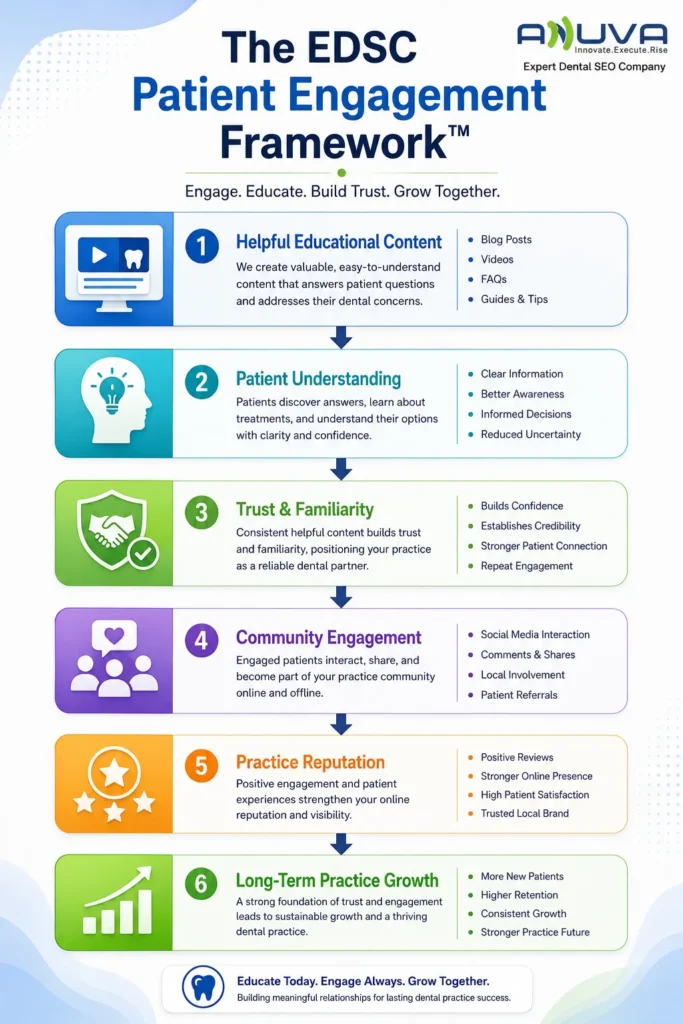
Stage 4 – Increase Community Engagement
Social media is designed for conversation. Publishing content without interacting with your audience limits its long-term effectiveness.
Meaningful engagement may include:
- Responding to comments
- Answering general questions
- Acknowledging patient feedback
- Participating in local community conversations
- Celebrating local events
- Supporting charitable initiatives
- Encouraging educational discussions
- Sharing community partnerships
Consistent engagement reinforces that your practice values relationships not simply marketing.
Stage 5 – Strengthen Practice Reputation
Every helpful interaction contributes to your practice’s online reputation. While review platforms remain important, social media also influences how prospective patients perceive your professionalism, communication style, and commitment to patient care.
A well-maintained social presence helps reinforce:
- Professional credibility
- Consistency
- Patient education
- Community involvement
- Team culture
- Practice personality
- Long-term reliability
These signals often complement online reviews and strengthen the confidence prospective patients have when comparing providers.
Our Dental Social Media Marketing Services
Our services are designed to help practices create a consistent, educational, and professionally managed social media presence that supports broader business objectives. Rather than focusing solely on publishing posts, we help build a long-term communication strategy that strengthens patient relationships and complements your overall marketing efforts.
Social Media Strategy
Every successful social media program begins with a clear strategy.
Before developing content, we work to understand:
- Practice goals
- Target audience
- Priority services
- Geographic market
- Existing marketing channels
- Brand identity
- Practice personality
- Communication style
This strategic foundation helps ensure that every post contributes to broader marketing and business objectives.
Content Planning
Consistency is one of the most important factors in successful social media marketing. A structured content calendar helps practices maintain regular communication while balancing different types of content throughout the month.
Content planning may include:
- Educational posts
- Oral health awareness campaigns
- Treatment highlights
- Team introductions
- Seasonal reminders
- Community events
- Practice news
- Frequently asked questions
- Patient success stories (with appropriate consent)
- Holiday and awareness observances
Planning content in advance improves consistency while reducing the pressure of deciding what to post each day.
Educational Content
Educational content forms the foundation of a patient-focused social media strategy. Rather than relying primarily on promotional messaging, we help practices publish content that answers common questions and supports informed healthcare decisions.
Examples include:
- Preventive dental care tips
- Oral hygiene education
- Treatment explanations
- Children’s dental health
- Cosmetic dentistry information
- Dental technology updates
- Frequently asked questions
- Myth versus fact content
- Recovery guidance
- Smile maintenance advice
Educational content positions your practice as a reliable source of information while supporting patient confidence throughout the decision-making process.
Community Engagement
Social media becomes more valuable when it encourages meaningful interaction. Community engagement helps strengthen relationships with current and prospective patients while reinforcing your practice’s commitment to personalized care.
Engagement activities may include:
- Responding to comments
- Acknowledging patient milestones
- Participating in local community conversations
- Supporting charitable organizations
- Celebrating local events
- Highlighting community partnerships
- Encouraging educational discussions
- Recognizing team achievements
Over time, these interactions help create a stronger sense of connection between your practice and the communities you serve.
Brand Building
Every interaction on social media contributes to how prospective patients perceive your practice. Long before someone schedules an appointment, they may explore your Facebook page, Instagram profile, LinkedIn presence, or YouTube channel to understand who you are and what your practice represents. A consistent social media presence helps reinforce your brand by communicating professionalism, expertise, and authenticity.
Brand-building content may include:
- Practice mission and values
- Team introductions
- Behind-the-scenes office culture
- Community involvement
- Continuing education and certifications
- Office technology and innovation
- Patient education initiatives
- Practice milestones and anniversaries
- Awards and professional recognition
- Local partnerships
Rather than promoting services in every post, brand-focused content helps prospective patients develop familiarity and confidence in your practice before they ever contact your office.
Video & Short-Form Content
Short-form video has become one of the most engaging content formats across modern social media platforms. Educational videos allow dentists to explain treatments, answer frequently asked questions, introduce team members, and demonstrate expertise in a format that is easy for prospective patients to consume.
Depending on your communication strategy, video content may include:
- Oral health tips
- Frequently asked questions
- Treatment overviews
- Meet the dentist videos
- Office tours
- Dental technology demonstrations
- Community event highlights
- Patient education series
- Seasonal oral health reminders
- Myth-versus-fact videos
Videos should remain educational, approachable, and patient-focused while avoiding overly promotional messaging.
Short-form content can be adapted for platforms such as:
- Instagram Reels
- YouTube Shorts
- TikTok (where appropriate for the practice’s brand)
Repurposing one recording into multiple platform formats helps maximize content value while maintaining consistency across channels.
Content Repurposing
Creating high-quality educational content requires time and expertise. Fortunately, a single piece of content can often support multiple marketing channels when planned strategically. Rather than creating entirely new material for every platform, practices can repurpose existing assets into a variety of formats.
Content repurposing also improves marketing efficiency by allowing one well-researched educational resource to support multiple platforms and audiences. Instead of creating every asset from scratch, practices can extend the lifespan of valuable content while maintaining consistent messaging across their entire digital marketing ecosystem.
For example:
One blog article can become:
- Multiple Facebook posts
- Instagram carousel posts
- LinkedIn articles
- Short educational videos
- Email newsletters
- Infographics
- Frequently asked question posts
- Google Business Profile updates
Similarly, one educational video may generate:
- YouTube Shorts
- Instagram Reels
- Facebook videos
- Blog content
- Quote graphics
- Educational email campaigns
This approach improves efficiency while maintaining consistent messaging across the broader marketing ecosystem.
Content repurposing also strengthens the relationship between:
- Content Marketing
- SEO
- Social Media
- Email Marketing
- Google Business Profile
- Patient Education
Each channel reinforces the others, extending the reach and longevity of valuable educational content.
Performance Reporting
Although organic social media is often associated with brand awareness, it should still be evaluated using meaningful performance indicators. Rather than focusing exclusively on vanity metrics such as follower counts, reporting should assess whether content is supporting broader business objectives.
Examples of useful performance indicators include:
- Audience growth
- Reach
- Engagement rate
- Content interactions
- Video completion rate
- Website referral traffic
- Click-through rate
- Community engagement
- Profile visits
- Shares and saves
- Content performance trends
These insights help practices understand which types of content resonate most effectively with their audience while guiding future content planning. Reporting should support continuous improvement rather than simply documenting activity.
What should dentists post on social media?
Dental practices should publish educational, informative, and patient-focused content that builds trust over time. Effective content often includes oral health tips, treatment explanations, preventive care advice, team introductions, community involvement, behind-the-scenes practice updates, patient success stories (with appropriate consent), frequently asked questions, and short educational videos. A balanced strategy emphasizes education and relationship building rather than constant promotion.
Organic Social Media vs. Facebook Ads
Although both channels use social media platforms, they solve different marketing challenges. Organic social media focuses on earning trust through consistent education and ongoing patient relationships, while Facebook and Instagram advertising are designed to accelerate visibility and generate targeted enquiries. Understanding these complementary roles allows practices to invest in each strategy more effectively rather than expecting one channel to accomplish every marketing objective.
Feature | Organic Social Media | Facebook & Instagram Ads |
Primary purpose | Build trust and long-term relationships | Generate targeted patient enquiries |
Reach | Existing followers and organic discovery | Paid audience targeting |
Timeline | Long-term brand development | Immediate campaign visibility |
Content | Educational and community-focused | Campaign-specific advertisements |
Investment | Ongoing content creation and management | Advertising budget plus campaign management |
Success metrics | Engagement, reach, brand awareness, referral traffic | Qualified enquiries, conversions, ROI |
Patient journey role | Relationship building | Lead generation |
Best use | Strengthening credibility and patient loyalty | Promoting consultations and specific treatments |
These approaches are complementary rather than competitive. Many practices achieve stronger long-term results by combining consistent organic content with strategically managed paid advertising. Organic social media nurtures trust, while paid advertising expands visibility and accelerates patient acquisition.
Why Dental Practices Choose Expert Dental SEO Company
Managing social media consistently requires more than publishing a few posts each month. The most effective social media strategies align educational content, community engagement, brand positioning, and long-term patient communication into a structured marketing system.
At Expert Dental SEO Company, we help dental practices build social media programs that strengthen patient relationships while supporting broader business objectives.
We Build Strategies Around Patient Education
Patients increasingly use social media to learn about healthcare providers before scheduling appointments. Rather than relying on promotional messaging, we help practices create educational content that answers common questions, explains treatments, and demonstrates professional expertise. Our content strategy focuses on providing genuine value that encourages long-term trust.
We Create Consistency Across Every Platform
Patients expect a professional, active, and consistent online presence.
We help practices maintain a coordinated brand experience across platforms such as:
- YouTube
- Google Business Profile
- Additional platforms where appropriate
Consistent branding, messaging, and publishing schedules help reinforce your practice’s identity regardless of where prospective patients encounter your content.
We Integrate Social Media With Your Entire Marketing Strategy
Organic social media performs best when it supports not replaces other marketing channels.
Our approach connects social media with:
- Dental SEO
- Content Marketing
- Google Business Profile
- Reputation Management
- Website Content
- Email Marketing
- Marketing Automation
- Google Ads
- Facebook Ads
- Local SEO
This integrated strategy helps extend the value of every piece of educational content while creating multiple opportunities for patient engagement.
We Focus on Sustainable Growth
Follower counts alone do not build successful dental practices.
Instead, we focus on creating content that contributes to:
- Stronger patient relationships
- Greater community trust
- Increased brand awareness
- Better educational resources
- Higher engagement quality
- Long-term marketing support
- Improved patient loyalty
This long-term perspective helps practices establish a social presence that continues generating value well beyond individual campaigns.
Our Social Media Management Process
Our management process combines strategic planning, consistent publishing, community engagement, and ongoing improvement.
Step 1 – Discovery & Brand Review
We begin by understanding your practice.
Topics include:
- Practice values
- Target audience
- Services
- Geographic market
- Brand personality
- Existing marketing channels
- Growth objectives
This foundation helps ensure that every content decision aligns with your broader business strategy.
Step 2 – Content Strategy & Calendar Planning
Next, we develop a structured publishing plan.
The calendar typically balances several categories of content, including:
- Educational content
- Preventive care
- Treatment information
- Team culture
- Community involvement
- Practice news
- Frequently asked questions
- Seasonal awareness campaigns
Planning ahead improves consistency while maintaining a healthy mix of educational and relationship-building content.
Step 3 – Content Creation & Publishing
Once approved, content is prepared for publication across the selected social platforms.
Depending on your strategy, content may include:
- Graphics
- Educational carousels
- Short-form videos
- Reels
- Photos
- Educational captions
- Infographics
- Practice updates
Publishing follows a structured schedule that maintains consistency without overwhelming followers.
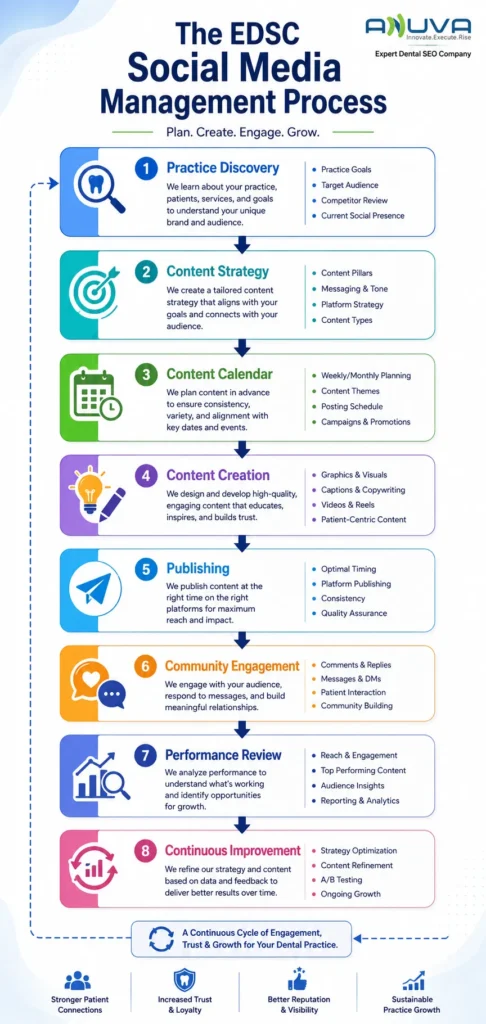
Step 4 – Community Engagement
Social media is a conversation.
We encourage practices to actively participate by:
- Responding to comments
- Answering appropriate questions
- Acknowledging patient feedback
- Supporting community discussions
- Encouraging educational interaction
This ongoing engagement helps strengthen relationships while reinforcing your practice’s commitment to patient care.
Step 5 – Performance Review & Continuous Improvement
As audience behaviour evolves, content strategies should evolve as well.
We regularly review:
- Audience engagement
- Reach
- Content performance
- Referral traffic
- Video engagement
- Community growth
- Publishing consistency
- Opportunities for future content
Insights gathered through reporting help guide future planning and improve long-term results.
Frequently Asked Questions
Organic social media helps practices educate patients, strengthen brand awareness, build community trust, and support long-term patient relationships. It complements other marketing channels such as SEO, local search, and paid advertising.
The appropriate platforms depend on your audience and practice goals. Facebook and Instagram remain valuable for many practices, while LinkedIn may support professional networking and YouTube can be effective for educational video content.
Consistency is generally more important than volume. A structured content calendar with regular educational and community-focused posts often performs better than irregular bursts of activity.
Social media is not a direct ranking factor for search engines, but it can amplify content, increase brand visibility, drive website traffic, encourage backlinks, and support overall digital marketing efforts.
Educational content, preventive care tips, treatment explanations, team introductions, community involvement, patient success stories (with appropriate consent), and short-form videos often encourage meaningful engagement.
No. A balanced content strategy includes education, practice culture, community involvement, patient engagement, and occasional promotional content. Overly promotional profiles may reduce long-term engagement.
Social media contributes to patient acquisition by increasing familiarity and trust. While it may not produce immediate appointments in the same way as paid advertising, it supports the decision-making process and strengthens other marketing channels.
Success may be evaluated using engagement, reach, referral traffic, audience growth, profile visits, content interactions, and how social media supports broader business objectives.
Organic social media works alongside SEO, content marketing, Google Business Profile optimization, paid advertising, reputation management, email marketing, and marketing automation to create a more consistent patient experience.
We specialize in dental marketing. Our approach combines strategic planning, educational content, patient engagement, and long-term brand development to help practices build trust while supporting sustainable growth.
Organic social media works most effectively when integrated with the rest of a practice’s digital marketing ecosystem. Educational posts can promote blog articles, reinforce SEO content, support Google Business Profile updates, encourage patient reviews, strengthen email campaigns, and provide valuable material for paid advertising. By connecting these channels, practices create a consistent patient experience while maximizing the value of every piece of content they produce.
Ready to Build Stronger Patient Relationships Through Social Media?
A successful social media presence is built one helpful interaction at a time.
Whether you’re starting from scratch or looking to improve an existing strategy, a structured approach can help your practice educate patients, strengthen trust, and create a more consistent online presence.
Schedule a Social Media Strategy Session
We’ll review your current social media presence, evaluate your content strategy, and recommend practical improvements that align with your practice’s goals and patient audience.
Request a Social Media Audit
Receive a professional assessment of your profiles, publishing consistency, content quality, engagement strategy, branding, and growth opportunities—along with actionable recommendations for improvement.